If you have ever driven through Hope Ranch and wondered why the homes feel so distinct, the answer is not just size or setting. It is the way architecture responds to the land, the views, and the area’s long-standing rural estate character. If you are buying, selling, or simply getting to know the neighborhood, understanding these design patterns can help you see what makes Hope Ranch so recognizable. Let’s dive in.
Why Hope Ranch Architecture Feels Different
Hope Ranch is a 773-lot community spanning about 1,863 acres in southeastern Santa Barbara County, between Highway 101 and the ocean. Its modern residential identity took shape after Harold Chase acquired the land in 1923 and added roads, utilities, and bridle trails. That history matters because it helps explain why Hope Ranch feels more like an estate landscape than a typical subdivision.
The lot pattern also shapes the architecture. According to the Hope Ranch Park Homes Association, parcels were formed around topography and outlook, which creates irregular acreage sites instead of tightly repeated lots. In practice, that gives homes more room to sit low on the land, open toward views, and connect with gardens, patios, and equestrian features.
The Design Rules Behind the Look
Architecture in Hope Ranch is not random. The Hope Ranch Park Homes Association reviews building design, landscaping, and improvements, while Santa Barbara County also retains land-use jurisdiction. The stated goal is to preserve the area’s rural character and ensure compatibility with surrounding properties.
That framework affects how homes are designed. The guidelines emphasize protecting views, privacy, and mature trees, while discouraging structures that overpower the site. As a result, many Hope Ranch homes feel grounded, private, and carefully scaled to their surroundings.
Spanish Colonial Revival in Hope Ranch
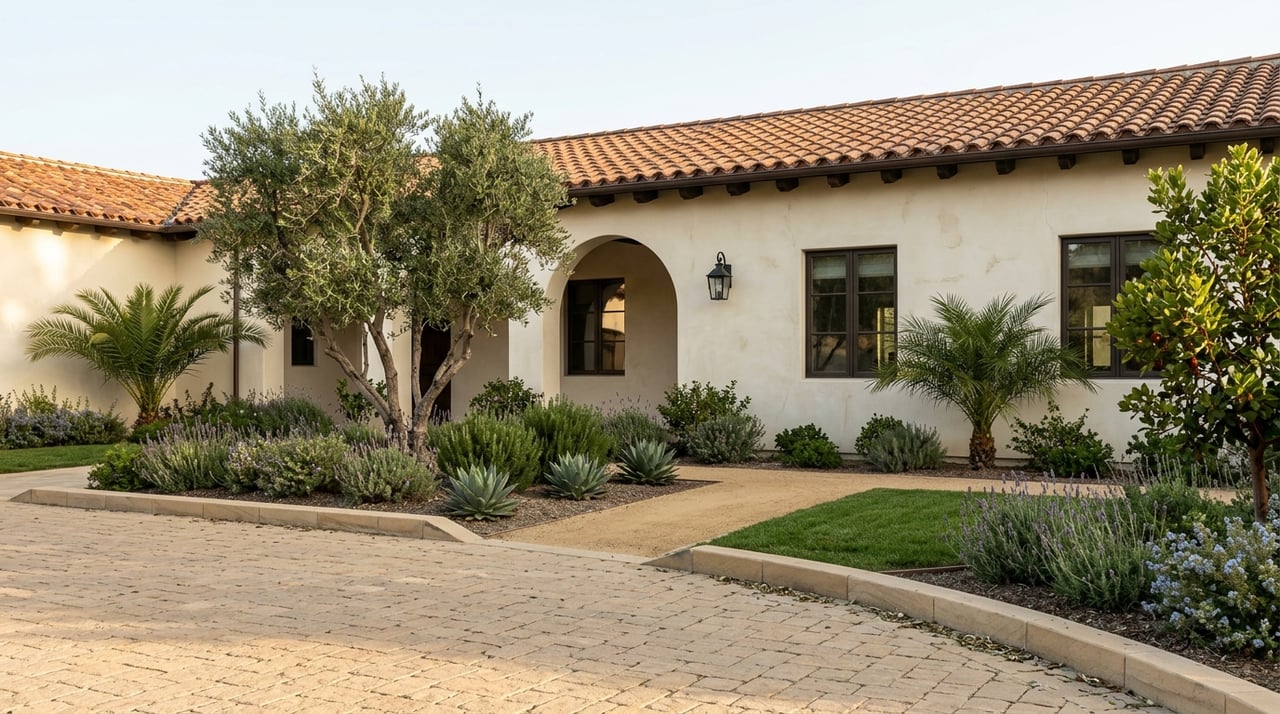
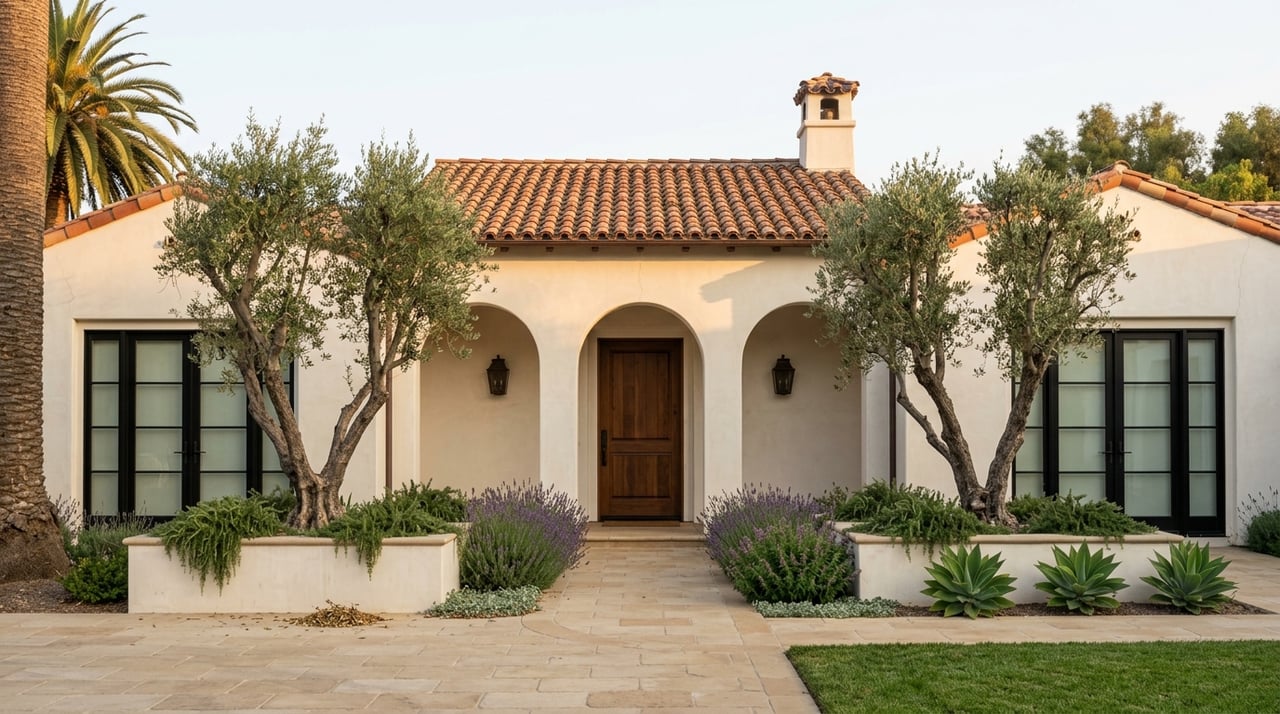
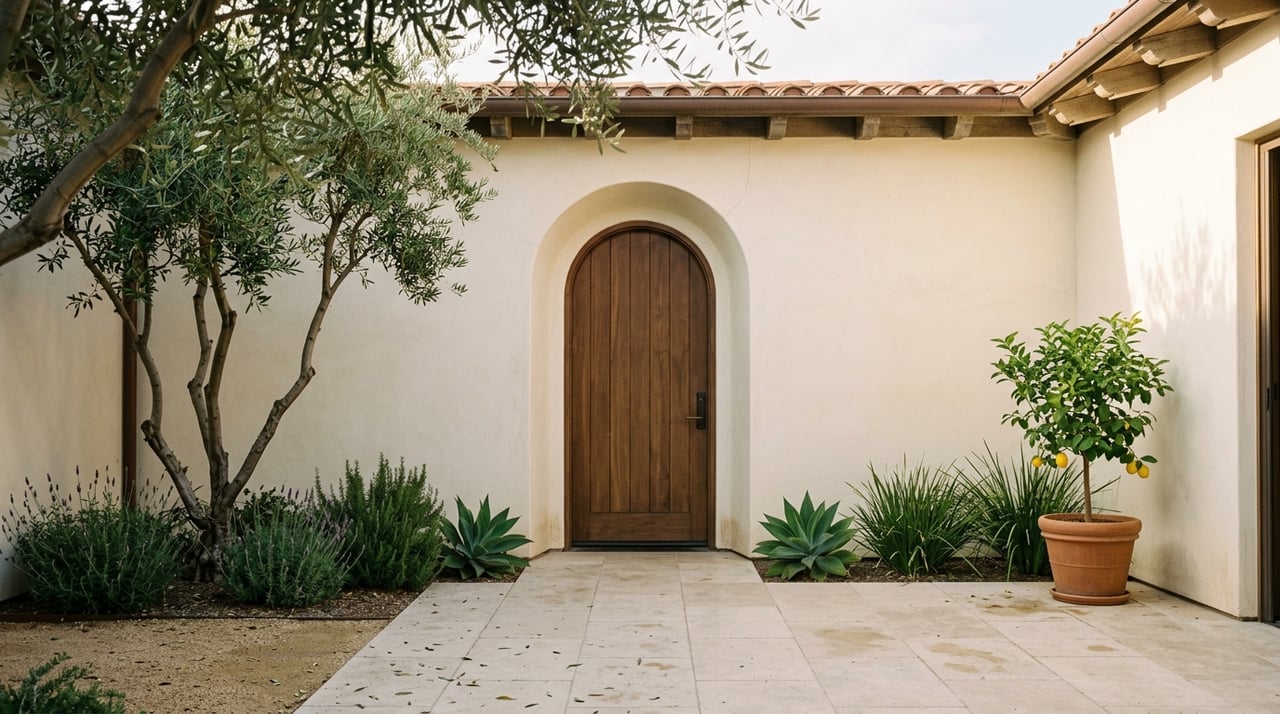
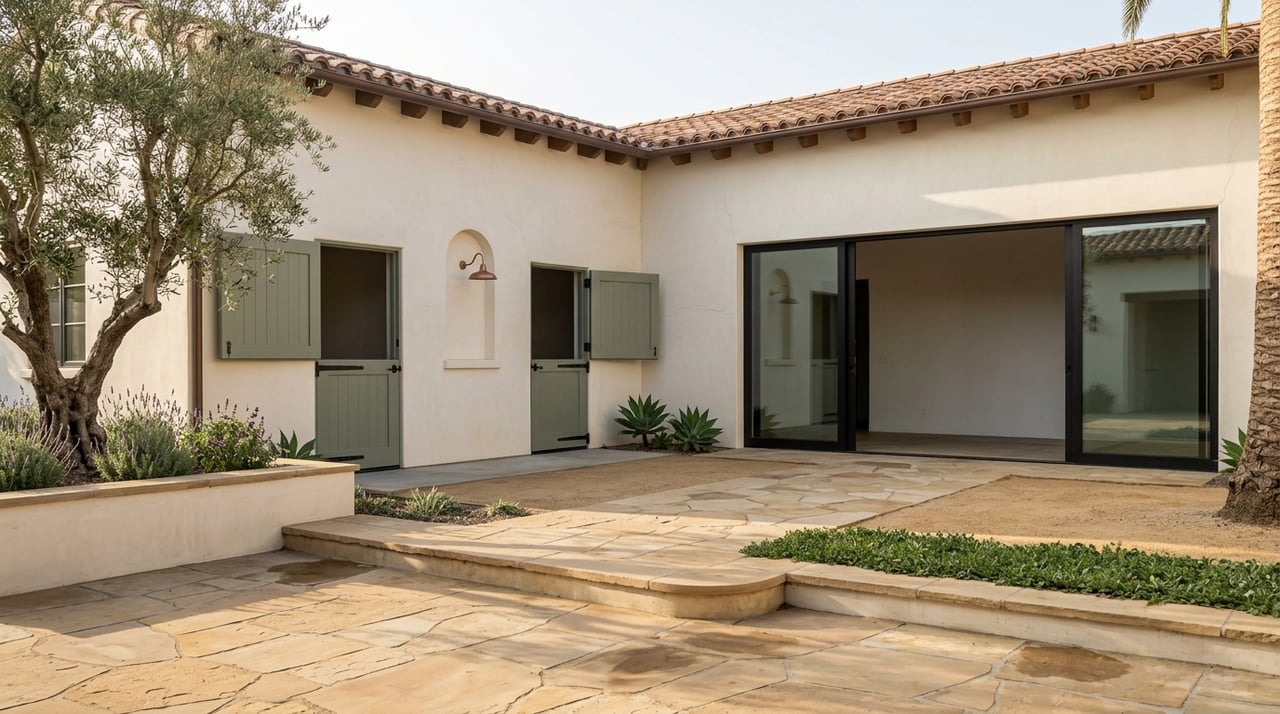
Spanish Colonial Revival is one of the clearest architectural signatures in Hope Ranch and throughout Santa Barbara. City design guidance describes the style with features like thick plaster or stucco walls, clay or terra-cotta tile roofs, deeply recessed wood windows, arched entries, balconies, patios, pergolas, and verandas. Santa Barbara identifies this tradition as central to the city’s architectural identity.
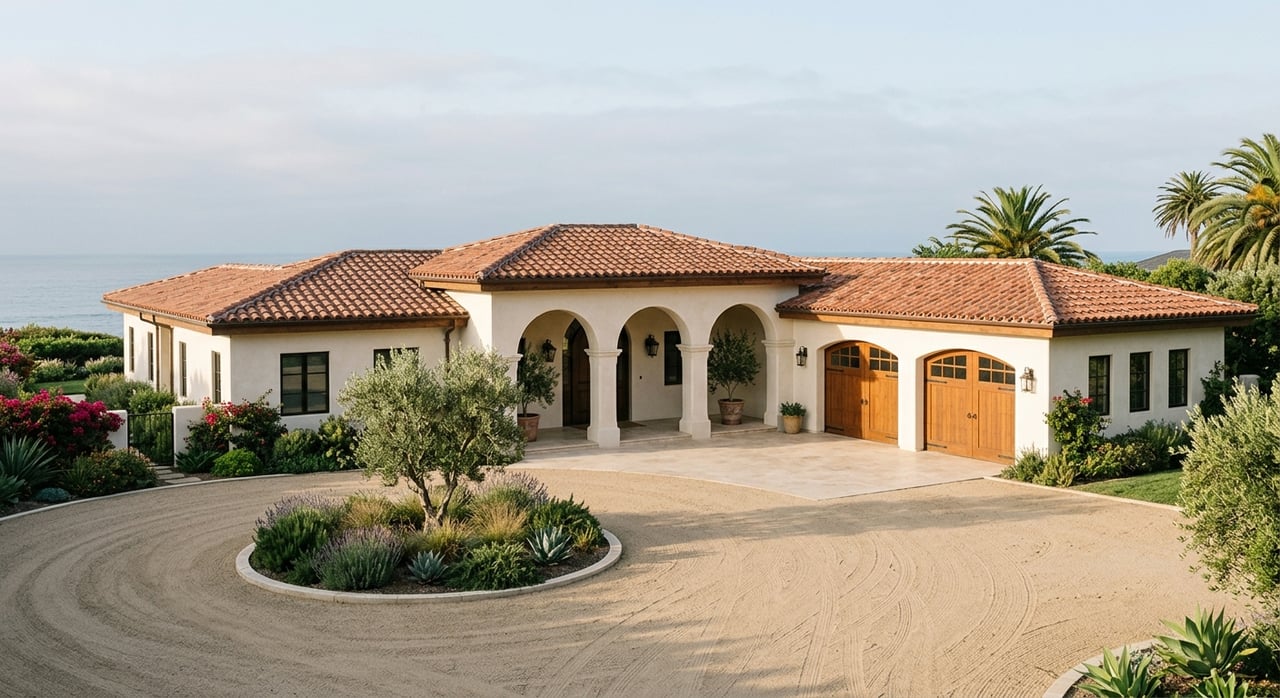
In Hope Ranch, this style works especially well because large lots give it space to breathe. Rather than stacking upward, Spanish-inspired homes can extend outward into courtyards, terraces, and garden rooms. That layout supports the low-profile, site-sensitive character favored by the local design guidelines.
You will often see how the style supports indoor-outdoor living without feeling oversized. Arched walkways, tiled roofs, and shaded outdoor spaces fit naturally into the neighborhood’s landscape-driven setting. The result is a home that feels both distinctly Santa Barbara and especially well suited to Hope Ranch.
Common Spanish-Style Features
- Smooth stucco or plaster exterior walls
- Clay or terra-cotta tile roofing
- Recessed wood windows
- Arched entries and openings
- Courtyards, patios, pergolas, and verandas
- A low, spread-out footprint that works with the lot
Ranch Homes and the Low-Slung Estate Form
Hope Ranch building guidelines state that traditional Ranch and Spanish styles still dominate the neighborhood. In this setting, Ranch is less about decoration and more about the overall form of the house. Think broad footprints, horizontal lines, and a structure that fits the land rather than commanding it.
That approach makes sense on larger parcels. A ranch home can connect naturally to long driveways, detached garages, guest houses, gardens, pools, and other outdoor areas while maintaining a calm visual presence. It is a practical architectural response to acreage and privacy.
The style also aligns with Hope Ranch’s equestrian-residential character. The guidelines explicitly account for accessory structures such as guest houses, stables, and corrals. Because of that, ranch homes often function as part of a larger property layout rather than as a single stand-alone structure.
Why Ranch Architecture Fits Hope Ranch
- It keeps massing low and horizontal
- It works well on irregular acreage lots
- It supports privacy without creating a bulky street presence
- It integrates easily with accessory structures
- It reflects the neighborhood’s rural estate atmosphere
Contemporary Coastal and Modern Design
While traditional styles still lead, Hope Ranch’s guidelines note that other architectural styles have gained acceptance. In recent years, contemporary and modern homes have become part of the neighborhood’s design mix. These homes often emphasize open plans, expansive glazing, and a strong relationship to ocean, island, or mountain views.
What makes modern design work here is not simply a newer look. It is the way these homes still respond to site, scale, and landscape. Even when the architecture is cleaner or more minimal, successful contemporary homes in Hope Ranch tend to preserve the same priorities of view sensitivity, low visual impact, and connection to the outdoors.
This is one reason many updated properties in Hope Ranch feel balanced rather than abrupt. A modern remodel may open walls to views, simplify circulation, and bring in more natural light, while still respecting the low-slung, private feel that defines the area. The style may evolve, but the neighborhood logic stays consistent.
How the Land Shapes the Homes
One of the most important things to understand about Hope Ranch is that the land drives the architecture. The community’s rules require landscape plans that preserve view corridors and bridle-trail easements. They also limit exterior lighting intensity and discourage visible flat roofs.
Roof materials are also carefully guided. The rules specify materials such as tile, slate, or shake-like products, which reinforces the neighborhood’s traditional, subdued appearance. Garages should be screened from street view, and pools and spas must be screened for both noise and visibility.
These design choices create a clear visual effect. Homes tend to spread horizontally, frame outdoor rooms, and sit quietly within mature landscaping. That is a big part of why Hope Ranch feels private and refined rather than dense or highly formal.
Equestrian Life and Estate Planning
Hope Ranch’s equestrian identity is built into the community itself. The association-maintained trails are a defining feature, and the area’s early development included bridle trails from the beginning. That history still influences how many properties are planned and experienced today.
For buyers, this helps explain why architecture here often accommodates more than the main house. Depending on the property, you may find guest houses, barns, stables, corrals, or outdoor circulation patterns that support a more estate-style layout. Even when horses are not part of your plans, those design elements contribute to the neighborhood’s spacious and layered feel.
This also affects how homes present from the street. Utilities, garages, and accessory uses are often visually subdued, allowing landscaping and architecture to lead. The result is a softer, more private appearance across the neighborhood.
Hope Ranch in the Santa Barbara Context
Hope Ranch is part of the broader Santa Barbara design story, but it has its own expression of it. Santa Barbara’s official history and design guidance identify Spanish Colonial Revival and Mediterranean Revival as defining parts of the city’s architectural identity. Hope Ranch shares that regional language, especially through stucco walls, recessed openings, and terra-cotta rooflines.
At the same time, Hope Ranch feels more rural and private than many other parts of the Santa Barbara area. Instead of a single repeating style, the neighborhood is better understood as a blend of Spanish-rooted forms, ranch practicality, and modern coastal living on large parcels. That layered mix is what gives Hope Ranch its unmistakable character.
What Buyers and Sellers Should Notice
If you are buying in Hope Ranch, architectural style is about more than curb appeal. It can tell you how a home interacts with its site, how much privacy it offers, and how well it captures outdoor living and views. In a neighborhood shaped by design review and large parcels, those details matter.
If you are selling, understanding the architectural language of your property can also help position it more effectively. Buyers are often drawn not just to square footage, but to the way a home expresses the Hope Ranch lifestyle through scale, materials, and connection to the land. Clear presentation of those qualities can make a property stand out.
Whether you are evaluating a classic Spanish estate, a low-slung ranch house, or a more contemporary residence, the most successful Hope Ranch homes tend to share one trait. They respect the site and let the setting do part of the work.
If you are exploring Hope Ranch homes or preparing to sell, working with a local advisor who understands the area’s architecture, land patterns, and buyer expectations can make a meaningful difference. For discreet guidance, neighborhood insight, and access to curated opportunities, connect with Nico Pollero.
FAQs
What architectural style is most associated with Hope Ranch homes?
- Spanish Colonial Revival is one of the most closely associated styles, with features like stucco walls, terra-cotta tile roofs, arched openings, and strong indoor-outdoor living spaces.
Are Ranch-style homes common in Hope Ranch?
- Yes. Hope Ranch building guidelines state that traditional Ranch and Spanish styles still dominate, and ranch homes fit the area well because they are typically low-profile and responsive to larger lots.
Do modern homes fit the character of Hope Ranch?
- Contemporary and modern homes have gained acceptance in Hope Ranch, especially when they remain sensitive to views, scale, landscape, and the neighborhood’s low-slung estate character.
How do Hope Ranch design guidelines affect home architecture?
- The guidelines aim to preserve rural character and compatibility by protecting views, privacy, and mature trees, while also guiding elements like roof materials, lighting, screening, and site placement.
Why do Hope Ranch homes feel more private than homes in denser neighborhoods?
- Large irregular parcels, mature landscaping, low horizontal massing, screened garages, and estate-style site planning all contribute to a more private and landscape-driven feel.
How does equestrian history influence Hope Ranch home design?
- Hope Ranch’s bridle trails and equestrian amenities support property layouts that may include accessory structures like stables, corrals, and guest houses, which helps shape the neighborhood’s estate character.