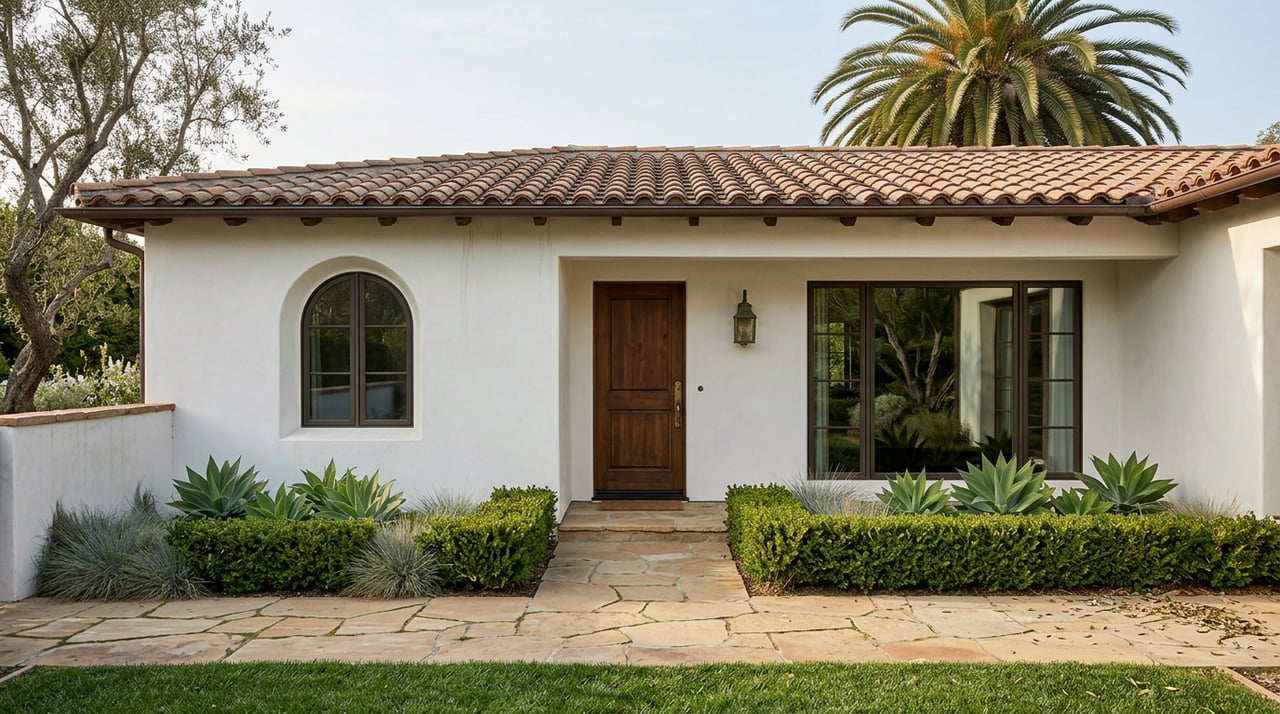
In January 2022, property owners on Creciente Drive submitted plans to replace their existing house with a two-story home. Routine work, on paper. Except a neighbor, Max Liskin, objected, pointing to language in a decades-old deed that he argued limited construction on that specific parcel to one story. What followed was not a quiet conversation over a property line. It became a Santa Barbara Superior Court case, Liskin v. Hope Ranch Park Homes Association, with Liskin eventually disclosing more than $1.17 million in legal fees by September 2024, largely spent pursuing the Hope Ranch Park Homes Association to enforce a restriction that court filings trace to what the parties call "the 1940 Deed."
The Creciente Drive case illustrates why buyers should review both community-wide rules and deed restrictions that may apply to individual parcels in Hope Ranch.
Community Rules and Parcel-Specific Restrictions
Every Hope Ranch property is governed by the community's Building Guidelines and CC&Rs, administered by the Hope Ranch Park Homes Association. These are the rules most buyers assume cover everything: architectural review for new construction, use of the private roads and bridle trails, access to the private beach, and the quarterly assessment that funds the association's own security patrol.
The association's governing document also recognizes that its guidelines may not include every parcel-specific restriction. Section 1.02 of the Hope Ranch Building Guidelines states that the guidelines exist "to help owners, prospective owners, and their architects and builders understand the policies, regulations, restrictions and certain design principles applicable to architectural review," and adds: "Deed restrictions unique to individual properties may also constrain use and development of certain parcels."
In other words, the community-wide rulebook openly admits that some lots carry private, older restrictions that sit outside it entirely.
The Case That Made It Real
The Creciente Drive dispute is the clearest illustration of what that sentence means in practice. Court filings describe the property at issue, owned by Mark and Pauline Lowe, as encumbered by what the rulings call "the One-Story Restriction," treated under Hope Ranch's Second Amended and Restated CC&Rs as an easement benefiting every property in the community. On March 15, 2022, Liskin sent a letter through his attorney arguing that the Hope Ranch Park Homes Association had an obligation to enforce that restriction against the Lowes' two-story plans.
The case ground through the Santa Barbara Superior Court for years. A related filing shows that similar one-story language was not unique to this one lot. A 1944 deed for a different Creciente-area parcel contained nearly identical wording, restricting a residence to "not to exceed one story in height," which the court used as evidence of how this type of restriction traveled through Hope Ranch's early deeds. Separate cost and fee rulings followed as the parties argued over who should pay for the litigation itself. By the time Liskin disclosed his legal spending through September 2024, the total had passed $1.17 million, according to the court's own accounting in a fee dispute tied to the case.
None of that was visible from a listing photo or a walk-through. It was sitting in a deed.
Same Street, Different Rules
Here is the part that should change how you think about due diligence in this neighborhood. The court record notes that the original developers behind Hope Ranch, Santa Barbara Estates, Hope Ranch Realty, and La Cumbre Estates, included one-story restrictions in some, but not all, of the deeds for properties along Creciente Drive.
Two houses on the same block can carry different rules, recorded years apart by different sellers, and there is no master list that flags which lots got which language. The community-wide CC&Rs tell you what applies to everyone. They do not tell you what applies only to the parcel you are about to buy.
What This Means If You're Planning to Build
If your plans for a Hope Ranch property include a remodel, a second story, a teardown, or anything beyond cosmetic work, the due diligence checklist looks different here than in a typical planned community. Before you remove contingencies:
- Request the preliminary title report and read the exceptions section closely, not just the summary. Deed restrictions typically appear there, often referencing an "Indenture" or "Declaration" by a date decades in the past.
- Ask the Hope Ranch Park Homes Association directly whether the parcel is subject to restrictions beyond the general CC&Rs, and get the answer in writing.
- If you're planning anything that changes the building envelope or height, have your architect or attorney trace the chain of title back to the original conveyance, not just the most recent transfer.
- Ask whether any adjacent or nearby lots have raised objections to construction in the past. Prior objections may be relevant to evaluating a parcel.
None of this is exotic. It is standard title work. Some restrictions were written to be enforced as covenants benefiting the whole community, not just the two neighbors involved.
Why the Math Is Different When Only a Dozen Homes Are for Sale
The deed restriction issue connects to something else worth understanding before you make an offer: Hope Ranch's market is thin enough that ordinary portal statistics can be misleading on their own.
As of July 2026, there were 12 houses for sale in Hope Ranch, ranging from $2,295,000 to $14,995,000, with a median list price of $6,999,000 and homes spending an average of 58 days on the market. Over the three months ending in May 2026, the median sold price came in noticeably lower, at $6.3 million, down 3.9 percent year over year, with homes selling in an average of 21 days compared to 56 days the year before. In June 2026 alone, the lowest-priced sale in the neighborhood was a house on Via Hierba at $4,500,000, and the highest was an estate on La Ladera Road at $16,700,000. Neighborhood-wide, supply stood at roughly a four-month pace as of July 1, 2026, up from 3.3 months a month earlier.
Put those numbers side by side and the gap between the list-price median and the sold-price median is not a mistake. It is what happens in a community of only 773 lots, where a dozen active listings and a handful of monthly closings can shift the reported average by six figures depending on which two or three homes happen to trade. A single property carrying a build restriction, or one clearly free of any restriction, can move that month's numbers more than it would in a neighborhood with hundreds of comparable sales.
This is the practical reason the deed restriction question matters beyond the legal risk. In a market this small, a restriction on a specific parcel is not a footnote. It is doing real work on that home's value relative to its neighbors, whether or not it shows up in the comps you pull from a portal.
Why Title Review Matters
Weigh the numbers against each other. A thorough title review and a conversation with the association before you write an offer costs a fraction of a percent of a Hope Ranch purchase price and typically adds only a few days to your due diligence timeline. In the Creciente Drive case, one party disclosed more than $1.17 million in legal fees through September 2024, and the litigation continued for years.
For buyers, that means checking the recorded documents for the specific parcel—not relying on the community-wide rules alone.
Common Questions
Does every Hope Ranch property have the same deed restrictions? No. Court records confirm that developers including Santa Barbara Estates, Hope Ranch Realty, and La Cumbre Estates included restrictions such as one-story height limits in some, but not all, of the deeds for properties on the same street. Restriction status has to be checked parcel by parcel.
Where do I find the community-wide rules versus the restrictions on a specific lot? The Hope Ranch Park Homes Association maintains the community's Building Guidelines and CC&Rs, which apply to every owner. Restrictions unique to an individual parcel are typically found in the chain of title itself, often in a preliminary title report's list of exceptions, and are not summarized anywhere in the association's general materials.
If the association didn't flag a restriction, is the HOA responsible for enforcing it anyway? According to the court's findings in the Creciente Drive case, a restriction structured as a covenant benefiting the whole community can create an enforcement obligation for the association once a neighbor raises it, regardless of whether it was actively tracked beforehand. As the buyer, you remain bound by the restriction either way.
If you are considering a purchase in Hope Ranch and want someone who checks this layer before you are three weeks into escrow, Nico Pollero works this neighborhood closely enough to know where to look. Request a Private Consultation & Receive Pocket Listings to start with a clear read on what a specific property will and will not let you build.
This article is general information, not legal, tax or financial advice. Consult a qualified professional about your situation.