Torn between waking up to the waves or taking in panoramic city and ocean views from the hills? In Santa Barbara, both lifestyles are iconic, but they come with very different rhythms, risks, and costs. You want clarity before you commit. In this guide, you’ll compare day-to-day living, microclimates, hazards, permits, insurance, and resale considerations for waterfront and hillside homes so you can choose with confidence. Let’s dive in.
Santa Barbara waterfront at a glance
Waterfront living in Santa Barbara spans city beaches like East Beach and West Beach, the Harbor and Stearns Wharf area, and beachfront pockets in Montecito, Hope Ranch, and toward Carpinteria. You get immediate beach access, quick reach to marina activities, and an effortless coastal vibe. Nearby dining and shops are often walkable.
Expect more seasonal activity. Summer and holidays bring higher foot traffic, events, and parking demand. If you value walkability and the energy of the shoreline, the waterfront checks those boxes.
Views are direct and uninterrupted toward the horizon. Some parcels sit on bluffs, which can shift your exposure and permitting path compared with flat sandy-front properties. Privacy varies by location and nearby public access points.
Hillside living at a glance
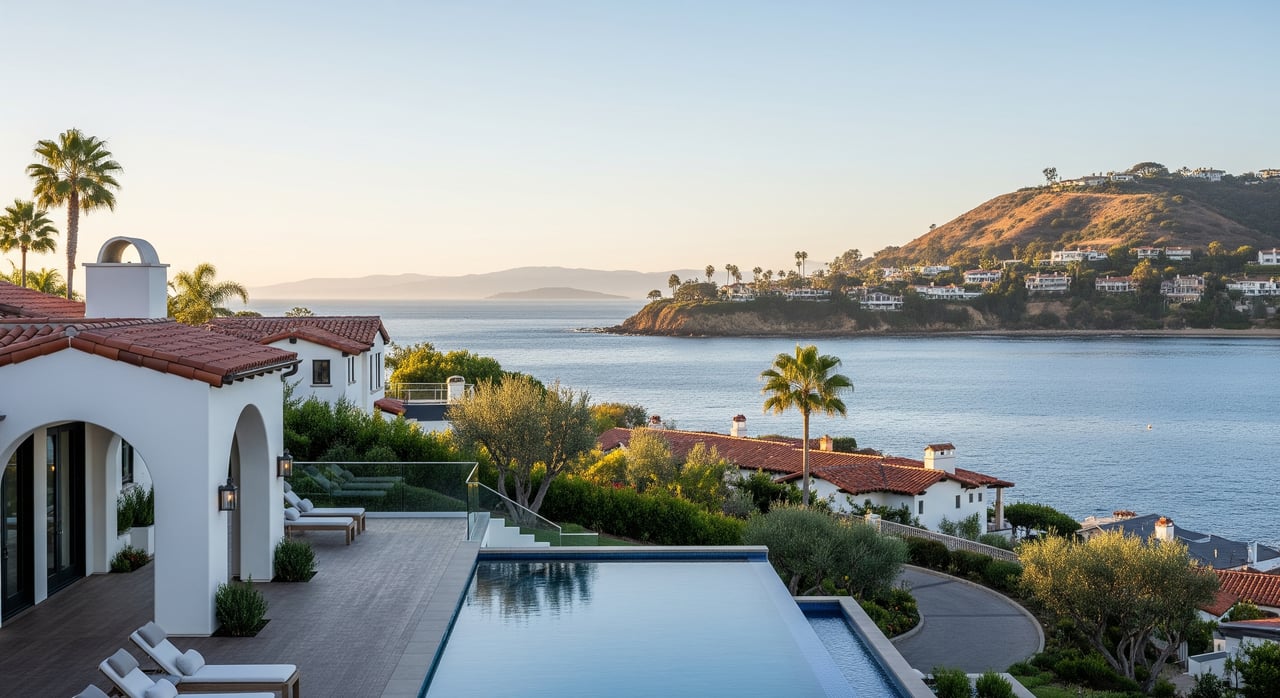
Hillside neighborhoods include the Riviera, Mission Canyon, San Roque and La Cumbre areas, and the foothills of Santa Barbara and Montecito. You often enjoy sweeping views of the ocean, harbor, and city, plus more topographic separation from activity below. Nighttime tends to be quieter.
Trailheads and garden settings are close at hand, and you typically have more seclusion. The trade-off is mobility. Most hillside homes require driving, and some have narrow roads or steep driveways.
Not all views are equal. Elevation, orientation, and lot position influence your view premium and how future development could affect sightlines.
Microclimates and daily comfort
Coastal zones feel cooler in summer and warmer in winter since the ocean moderates temperatures. The marine layer is more common along the water, which can bring morning clouds that burn off by midday. Hillside areas can be warmer and drier with bigger day-to-night swings.
Salt exposure is a real maintenance factor at the waterfront. Metal, paint, and some landscaping weather faster near the ocean. Hillside properties can see more wind on ridgelines, but they typically face less salt-driven corrosion.
Humidity near the coast can influence material choices and upkeep. Expect more frequent exterior maintenance on the shoreline compared with many hillside settings.
Risks and long-term hazards
Waterfront exposures
Coastal erosion and bluff retreat are important considerations for beachfront and bluff-top parcels. Shoreline armoring and seawalls are highly regulated and can be costly, and in some cases may not be permitted. For low-lying areas, tidal flooding and storm surge can increase short-term risks.
Sea level rise is a planning factor over the long term. Use parcel-specific tools like the NOAA Sea Level Rise Viewer and check FEMA flood maps to understand inundation scenarios and flood zone designations.
Tsunami exposure exists along the coast. Evacuation route awareness should be part of your preparedness plan.
Hillside exposures
Wildfire is a primary hillside risk. Many upslope neighborhoods fall within designated fire hazard zones. Review your parcel on the Cal Fire fire hazard maps and follow local defensible space and ignition-resistant construction standards.
Slope stability matters. Landslides, debris flows, and storm runoff can impact steep parcels, especially following major fire seasons. Engineered drainage, retaining systems, and vegetation management are standard practices for many hillside homes.
Earthquakes
All Santa Barbara properties have seismic exposure. Parcel-level risks like liquefaction potential and proximity to faults vary. Building codes address seismic design, and geologic due diligence helps quantify site conditions.
Quick comparison
- Waterfront: higher exposure to coastal processes and salt, with generally lower wildfire risk.
- Hillside: higher exposure to wildfire, slope failure, and storm-runoff impacts, with less coastal flood risk.
Permits, rules, and site constraints
Coastal zone and waterfront permitting
Development along the shoreline must align with California Coastal Act policies and local coastal programs. The California Coastal Commission provides guidance, and the City and County administer local rules within their jurisdictions. New shoreline protective structures can be discouraged if they affect public access or natural sand movement.
Expect coastal engineering studies, erosion assessments, and environmental review for many waterfront projects. Verify your parcel’s jurisdiction with the City of Santa Barbara Planning team or Santa Barbara County Planning, then confirm the applicable coastal overlay requirements.
Hillside development and geotechnical standards
Hillside projects typically require geotechnical reports, slope stability analyses, grading permits, and erosion control plans. Engineered foundations and retaining structures are common. Local building codes also enforce wildfire hardening and defensible space in designated areas.
Access and emergency egress
Steep driveways and narrow hillside roads can limit emergency access, affect permitting, and influence insurance availability. Always evaluate ingress and egress and confirm evacuation routes for both fire and storm events.
Insurance and cost of ownership
Insurance availability and premiums depend on parcel-specific hazards. If your property sits in a FEMA flood zone, flood insurance through NFIP or a private flood policy may be required or advisable. Hillside parcels in higher fire hazard zones may see reduced insurer options or mitigation requirements such as defensible space and ember-resistant roofs.
Earthquake insurance is a separate, optional policy in California. Many homeowners choose it based on risk tolerance and financial planning. Policy costs vary by building type, retrofit status, and site conditions.
Maintenance profiles differ. Waterfront homes often need more frequent exterior painting, corrosion-resistant materials, and attention to beach or bluff protection features. Hillside homes may require ongoing vegetation management, drainage upkeep, retaining wall inspection, and occasional slope stabilization.
Mitigation costs also diverge. Seawalls and revetments, where allowed, can be expensive and complex to permit. Wildfire hardening measures and larger defensible space areas can add costs for hillside properties.
Market and resale dynamics
Waterfront and beachfront properties typically command the highest price premiums due to rarity and direct access to the sand and harbor lifestyle. Hillside homes with broad, unobstructed ocean and city views also carry strong premiums, sometimes approaching waterfront price points.
Buyer pools differ. Waterfront locations often attract lifestyle and second-home buyers who prioritize immediate beach access. Hillside buyers often value privacy, views, and lower exposure to coastal flooding. Steep access or visible risk features can narrow the buyer pool on some hillside parcels.
Short-term rental potential varies by jurisdiction and neighborhood. Local rules and permit requirements affect income prospects. Check applicable regulations with the City or County planning departments before underwriting rental assumptions.
Neighborhood snapshots
Waterfront examples
- East Beach to Harbor: Walkable to Stearns Wharf, harbor activities, beach paths, and restaurants. Expect seasonal events, visitor activity, and easy sand access.
- Montecito and Hope Ranch beachfront: Estate-scale properties with direct beach frontage or beach access nearby. Privacy depends on lot orientation and nearby public access points.
Hillside examples
- The Riviera: Panoramic city, harbor, and island views with curving hillside streets. Access and driveway design can vary by block.
- Mission Canyon and Foothills: Proximity to trails and garden settings, with a range of lot sizes and elevations. Confirm fire hazard designations and drainage.
Due diligence checklist for buyers
Use this quick list to verify risks, costs, and approvals before you open escrow.
- Hazard designations
- Confirm flood status on the FEMA Map Service Center
- Review fire hazard severity on Cal Fire’s maps
- Check landslide, liquefaction, and seismic hazard layers via county geologic resources
- Permits, liens, repairs
- Pull permit history for grading, slope stabilization, seawalls, and structural work
- Review easements, coastal access rights, and bluff setback records
- Professional studies and inspections
- Geotechnical report for hillside or bluff-top sites
- Coastal engineering or erosion assessment for beachfront or bluff parcels
- Structural inspection focused on foundations, retaining walls, roofs, and drainage
- Vegetation and fuels assessment with wildfire hardening recommendations
- Insurance pre-checks
- Contact carriers for homeowner, flood, wildfire, and earthquake estimates and availability
- Utilities and services
- Verify sewer or septic, water pressure, and slope-related utility constraints
- Confirm private road or HOA maintenance obligations
- Access and evacuation
- Map fire and storm evacuation routes and assess driveway and road grades
- HOA and CC&Rs
- Review rules that affect exterior changes, landscape, and fire mitigation
- Historical event context
- Ask about prior storm damage, bluff retreat, creek flooding, or debris flows and remediation
Which lifestyle fits you?
Choose waterfront if you want immediate beach access, walkability to coastal amenities, and the rhythms of an active shoreline. Choose hillside if you prioritize panoramic views, privacy, and a quieter setting with quick access to trails and open space. Both options can be excellent long-term investments when you understand parcel-level risks, insurance, and maintenance.
If you want a private, data-driven consultation tailored to a specific address, connect with Nico Pollero to Request a Private Consultation & Receive Pocket Listings.
FAQs
What are the biggest risks when buying a Santa Barbara waterfront home?
- Coastal erosion, sea level rise, storm surge, tsunami exposure, and salt-driven maintenance are key; review NOAA sea level scenarios and FEMA flood maps for parcel specifics.
How does hillside wildfire risk affect insurance in Santa Barbara?
- Insurers may raise premiums, require mitigation like defensible space, or limit coverage in higher-risk zones; start with the Cal Fire hazard maps and speak with local brokers early.
Are seawalls allowed on bluff-top properties near Santa Barbara beaches?
- Shoreline armoring is tightly regulated and not guaranteed; decisions weigh public access and natural processes, so consult the California Coastal Commission and local planning staff.
What permits are needed for a new build in the coastal zone?
- Expect coastal development review, environmental assessments, and coastal engineering studies; verify requirements with the City of Santa Barbara Planning or Santa Barbara County Planning.
Will climate change affect hillside homes as much as waterfront homes?
- Impacts differ: waterfront parcels face sea level rise and coastal storms, while hillsides may see increased wildfire frequency and storm-driven debris flows; explore projections on Cal-Adapt.
Which holds value better in Santa Barbara, waterfront or hillside?
- Direct beachfront is often the rarest and most premium, while top-tier hillside view homes also trade at premiums; value depends on view quality, access, hazard profile, and buyer demand.